
Jul
How To Guides, Knowledge Base
Fake Vs Genuine Shure Wireless Microphones in Kenya: The Ultimate Buyer’s Guide
If you have ever shopped for sound equipment along Luthuli Avenue or checked listings on Jumia and PigiaMe, you already know that Shure is the most popular audio brand in Kenya. From churches in Nairobi to event stages in Mombasa, the iconic crisp vocal reproduction of Shure is highly coveted.
However, its massive popularity has made Kenya a prime dumping ground for counterfeit audio gear. Rogue dealers sell high-copy duplicates that look almost identical to the real deal, leaving buyers with dropped signals, awful handling noise, and wasted money.
Buying a fake Shure wireless system (like the heavily counterfeited BLX, GLX-D, or SLX-D series) can completely ruin your event. This definitive guide breaks down exactly how to tell a genuine Shure wireless microphone from a fake in Kenya, detailing prices, physical giveaways, and where to shop safely.
1. The Price Red Flag (If It’s Too Good to be True…)
The easiest way to spot a counterfeit Shure microphone in Kenya is the price tag. Genuine pro-audio gear requires significant engineering and licensing fees for wireless frequency bands.
Fake systems use cheap VHF or unregulated UHF components that cost pennies to manufacture.
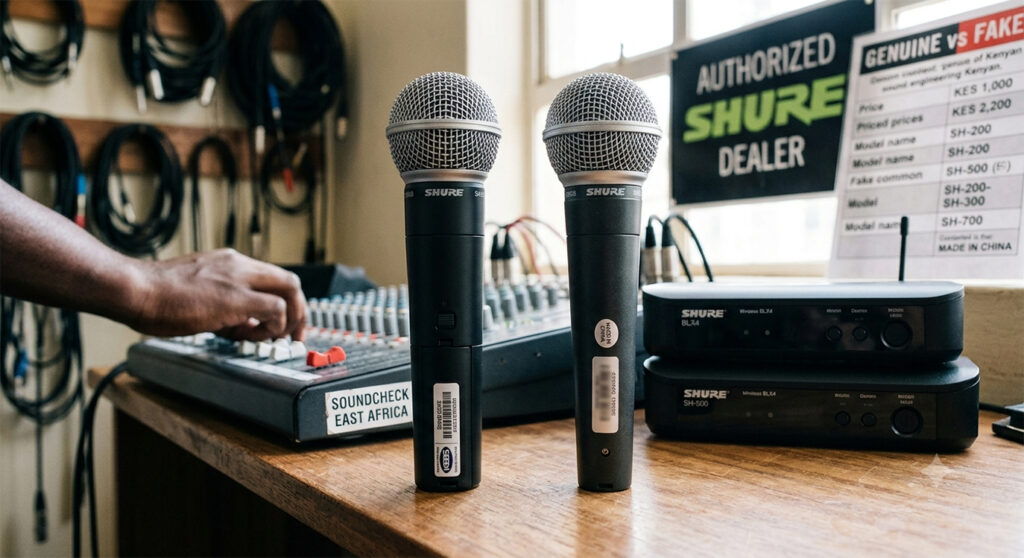
Warning on “Fantasy Models”: If you see a wireless system labeled “Shure SH-500” or “Shure SM-820A” selling for KES 4,000 to KES 8,000, it is 100% fake. Shure does not even manufacture these model numbers. They are entirely fictional names slapped on cheap generic microphones.
2. Key Physical Differences: Handheld & Receiver
Counterfeiters have gotten incredibly good at mimicking the exterior casing, but they always cut corners on the finer details.
The Weight Test
Pick up the handheld microphone transmitter. Genuine Shure transmitters feel solid, balanced, and deliberately weighted because of high-grade internal shielding and metals. A fake handheld mic will feel surprisingly light, hollow, and plasticky. For example, a counterfeit SM58 capsule capsule or body can weigh up to 60–90 grams less than a genuine one.
The Display Screens & Icons
On mid-tier wireless receivers (like the QLXD4 or GLXD4 systems), pay very close attention to the LCD/LED screens.
- On a Fake: The battery display icons are often poorly backlit, misplaced (e.g., positioned at the bottom left instead of the top left), or use generic fonts.
- On a Genuine: The text is razor-sharp, bright, and perfectly aligned. The channel readouts match Shure’s official formatting precisely.
Packaging Inserts
Open the box. Genuine Shure wireless setups are packaged with meticulous care, often utilizing custom clear-molded plastic inserts or specific heavy-duty gray/black cardboard to keep items safe. Fake systems almost always arrive sitting inside cheap, easily crushed white styrofoam or poorly cut generic white foam inserts.
3. The Ultimate Technical Giveaways
If the physical hardware looks convincing, the internal electronics will always reveal the truth.
Frequency Adjustments and “Dead” Ports
On many high-end fake Shure receivers, the back panel features an Ethernet port or advanced antenna distribution loops. In a fake unit, the network port is literally just a hollow plastic socket glued into the chassis—it connects to absolutely nothing inside the circuit board. It will never show up or sync with Shure’s Wireless Workbench (WWB) software. Furthermore, fake systems rarely feature a functioning “QuickScan” button to automatically locate an open, interference-free frequency band.
Handling Noise Rejection
Turn the microphone on and gently tap or slide your fingers along the handle.
- Fake Mic: You will hear an incredibly loud, sharp, thumping sound through your speakers. The handling noise rejection is practically non-existent because the capsule isn’t isolated.
- Genuine Mic: An internal pneumatic shock-mount system absorbs handling vibrations, meaning your hand movements remain completely silent.
4. How to Ensure You Are Buying 100% Genuine Shure
To protect your investment when shopping in Kenya, follow this strict checklist:
1.Check for Serial Numbers & Holograms:Before paying.
Examine the box for an official factory barcode sticker featuring a unique Serial Number (S/N). Counterfeit boxes often print the barcode blurred directly onto the cardboard with no distinct, traceable serial number sticker. Look out for official distributor holographic security tags.
2.Verify the Supplier’s Reputability:Avoid sketchy deals.
Only purchase your sound equipment from long-standing, established audio-visual dealers in Kenya who offer multi-year manufacturer warranties. Avoid buying high-end audio gear from generic online classified vendors or open-air market stalls offering massive discounts.
3.Test the Wireless Range:In-store verification.
If possible, request a live test. A genuine Shure UHF wireless system (like the BLX) easily maintains a clear, drop-out-free signal up to 300 feet (91 meters) within line of sight. Fake units will begin to clip, distort, or lose signal entirely just 15 to 20 meters away or when a wall blocks the path.
Investing in authentic Shure equipment guarantees that your vocals cut beautifully through the mix, your RF signal stays rock-solid during critical presentations, and your gear survives years of rigorous use on the road.
At PRO-AUDIO KENYA we only sell 100% Genuine Products from all the trusted Brands we deal with
